
New to Homeschooling? Things I Wish I Knew When We Started


When you first decide to homeschool, there is this moment when it all feels exciting.
If you're new to homeschooling, there are a few things I wish someone had told us in the beginning.
You picture slow mornings, books spread across the kitchen table, nature walks, field trips, kids who are excited to learn, and finally having the freedom to teach your children in a way that works for your family.
Then you actually start.
Suddenly you are comparing twelve math curriculums at midnight. Someone in a Facebook group says the curriculum you just bought ruined their entire year. Another person says it changed their life.
You discover educational philosophies you did not even know existed.
Classical. Charlotte Mason. Montessori. Unit studies. Unschooling. Traditional. Eclectic.
You start wondering whether your second grader is behind in math, whether you are doing enough science, how many hours school is supposed to take, whether you need a homeschool room, and why the curriculum you downloaded has 846 pages.
And somehow everyone on social media appears to be homeschooling peacefully in a spotless house while baking sourdough bread.
If that is where you are right now, I want to tell you something we had to learn ourselves.
You do not have to figure out your entire homeschool before you begin.
Homeschooling is something your family grows into.
Here are some of the things I wish someone had told us sooner.
Be prepared it is a long list, but it is worth the read. I have included helpful links and resources.
1. Start with the law, not the curriculum
This is probably the least exciting advice in this entire article, but it should be first.
Before buying curriculum or creating schedules, find out what your state actually requires.
Homeschool laws are different from one state to another. Depending on where you live, there may be requirements involving notification, attendance, subjects, records, assessments, or other documentation.
Do not rely solely on a Facebook comment that says, "This is what I do."
The U.S. Department of Education maintains information about state requirements for private and home schools, including state by state information.
Another useful research source is the Johns Hopkins Homeschool Hub. It collects homeschool data and state information and is specifically designed as a factual, non advocacy resource.
Know your responsibilities first. Then you can build your homeschool around your family instead of constantly wondering whether you forgot something important.
2. You do not need to recreate public school at home
This was one of the biggest mindset shifts for us.
A child in a traditional classroom is one student among many. There are transitions, announcements, classroom management, waiting for other students, lining up, passing out materials, and a lot of other things happening during a school day.
Homeschooling is different.
If your child understands a math concept after fifteen minutes, you do not have to keep teaching it for another thirty five minutes because the schedule says math should last fifty minutes.
If everyone is fascinated by the science experiment, you can keep going.
If reading is turning into a battle and everyone needs a break, you can stop.
Finishing school before lunch does not automatically mean you did not do enough.
One of the greatest advantages of homeschooling is that education can fit the child instead of requiring the child to fit a classroom schedule.
3. Do not buy an entire homeschool before you know how your child learns
It is very easy to spend hundreds of dollars trying to solve problems you do not actually have yet.
A beautiful curriculum does not necessarily mean it is the right curriculum for your child.
Some children love workbooks.
Some need to talk through everything.
Some want videos.
Some need manipulatives.
Some will happily read twenty pages of history and complain about five math problems.
And children in the same family can be completely different.
Before buying an expensive complete program because everyone online loves it, spend some time figuring out what works for the child sitting in front of you.
One resource I really like for this is Cathy Duffy Reviews. The site has been reviewing homeschool curriculum since 1984 and now includes more than a thousand curriculum and homeschool resource reviews. It also has a free advanced search and a learning style assessment.
It is particularly useful when you are staring at five curriculum choices that all claim to be perfect.
4. The curriculum works for you. You do not work for the curriculum
This deserves its own section.
You are allowed to skip a lesson.
You are allowed to change the schedule.
You are allowed to decide your child already understands something.
You are allowed to spend two weeks on something that was supposed to take two days.
You are allowed to stop using a curriculum that clearly is not working.
Buying a curriculum does not enter you into a legally binding relationship with Lesson 147.
The curriculum is a tool.
Your child is the reason you bought the tool.
That distinction can save a lot of frustration.
5. Give yourself permission to have a simple beginning
You do not need a color coded homeschool command center before the first day.
You need much less than Pinterest would have you believe.
A few good books, something to write with, a basic plan for math and reading, and some curiosity can take you surprisingly far while you figure everything else out.
You can add things as you discover that you actually need them.
This is especially helpful financially.
Instead of spending $800 in August trying to anticipate every possible need, start with the essentials and let your homeschool show you what is missing.
6. Your public library might become one of your best homeschool resources
Before buying a book, check the library.
Before buying an audiobook, check the library.
Before paying for a research resource, ask what your library provides.
Many libraries offer much more than physical books. Depending on your library system, you may have access to eBooks, audiobooks, educational databases, language programs, museum passes, events, maker spaces, classes, and other resources.
One of our favorite examples is Libby. If your library participates, your library card can give you free access to eBooks, audiobooks and magazines. Libby itself has no subscription fee, in app purchases, or late fees.
A library card can replace a surprising number of homeschool purchases.
7. There is an unbelievable amount of good free educational material online
Free does not automatically mean low quality.
Some of the best supplemental resources available to homeschool families come from universities, museums, nonprofit organizations, libraries, and government agencies.
Khan Academy is completely free and includes lessons, videos, exercises, quizzes and tests across subjects including math, science, grammar, economics, computer programming, art history, AP preparation and SAT preparation. They also specifically provide guidance for homeschool families.
For younger children, Khan Academy Kids is free for families and designed for roughly ages 2 through 8, with early literacy, math and other foundational learning activities.
Core Knowledge Foundation offers substantial curriculum materials that can be downloaded free, including materials in language arts, history, geography and science.
Smithsonian Learning Lab gives families free access to millions of Smithsonian digital resources including images, texts, videos, audio, lesson plans and collections.
NASA Learning Resources has free activities, videos, educator guides and lesson plans covering everything from Earth science to engineering and space exploration, with resources searchable by grade level.
The National Park Service educator collection includes lesson plans, primary sources, science activities, virtual experiences and other educational materials.
These are not resources you need to use every day. Bookmark them.
Then when your child suddenly becomes obsessed with volcanoes, George Washington, Saturn or wolves, you have somewhere good to start.
8. Free curriculum exists too
You do not necessarily need to spend hundreds of dollars to begin homeschooling.
For families looking for a Christian option, Easy Peasy All in One Homeschool provides a free online curriculum. Its elementary and middle grade program covers subjects including reading, writing, grammar, spelling, math, history, science, Bible, computer, music, art and PE. The program says families can use the online curriculum without purchasing books, although some courses have printable materials and optional physical workbooks.
Families interested in a Charlotte Mason approach can explore AmblesideOnline. Its curriculum, schedules and booklists are available without charge, although families generally need to obtain the books and add their own math and foreign language resources.
And the free Core Knowledge materials mentioned above can be another useful option, whether you use complete units or just fill gaps in another curriculum.
Free does not mean you should download everything you find.
That leads directly to the next lesson.
9. Collecting homeschool resources can become its own hobby
Ask me how many PDFs a homeschool parent can save "for later."
Actually, don't.
Free curriculum is only useful if it makes your life easier.
It is very easy to download hundreds of worksheets, unit studies, planners, reading lists and activities because someday you might need them.
Then you have simply replaced physical clutter with digital clutter.
When you find something good, ask:
Will we realistically use this?
Does it solve a problem we currently have?
Do I know when we would use it?
If the answer is no, you probably do not need to download it just because it is free.
10. You are allowed to mix things together
You do not have to choose Team Curriculum A and swear allegiance to it forever.
Your child can use one company for math, another for language arts, library books for history, documentaries for science, and a completely different resource for handwriting.
In fact, research suggests that mixing resources is normal. Johns Hopkins found that nearly nine out of ten homeschooling parents use some kind of supplemental support or resource, and many families combine online resources, co-ops, online classes, schools and tutors.
Your homeschool does not have to fit neatly into a curriculum catalog.
It needs to work for your family.
11. A bad homeschool day does not mean homeschooling is failing
There will be bad days.
Someone will cry over math.
You may be the someone.
A pencil will disappear even though you own 143 pencils.
A science experiment will fail.
The toddler will need you precisely when an older child needs help.
Someone will suddenly forget everything they have ever learned about fractions.
There will be days when you wonder whether everyone else's homeschool is going better than yours.
Do not evaluate your entire homeschool based on Tuesday.
Sometimes the answer is to change curriculum.
Sometimes the answer is to change your routine.
And sometimes everyone needs lunch and an afternoon outside.
12. Progress matters more than keeping up with someone else's child
Homeschooling makes comparison incredibly tempting.
There will always be a seven year old on the internet reading Shakespeare and a nine year old apparently doing calculus for fun.
That child is not your lesson plan.
Pay attention to where your child was and where your child is going.
Are they understanding more?
Are they becoming more confident?
Are they curious?
Can they do something today that they struggled with six months ago?
Those things matter.
One reason families choose homeschooling in the first place is the ability to respond to individual needs. Current research shows homeschool families are diverse in their motivations, including academics, family life, safety, different educational approaches, health and special learning needs.
You do not have to give up that flexibility just because someone else's child is on a different page.
13. Socialization usually needs intention, not panic
This is one of the first questions people ask homeschool families.
"But what about socialization?"
The better question is probably, "Where will my child build relationships?"
Those relationships can come from co-ops, church, sports, Scouts, 4-H, library programs, neighborhood friends, music lessons, clubs, volunteering, community classes, field trips and plenty of other places.
You do not need to schedule an activity every day.
But if your family starts feeling isolated, do something about it early.
Look for a local homeschool group. Try a co-op. Attend a library event. Invite another family to the park.
Johns Hopkins' recent survey found 29% of homeschooling parents reported using co-ops as part of their children's education.
Community does not have to look like a classroom.
14. Field trips count
One of my favorite things about homeschooling is remembering that learning does not only happen at a desk.
Go to the zoo.
Visit the science center.
Walk through a historical site.
Tour a farm.
Visit a nature center.
Go to the art museum.
Walk a trail and identify trees.
Let your child ask the librarian a question instead of Googling it.
Watch a mechanic work on something.
Cook a recipe and talk about fractions.
Grow a garden.
Visit a local business.
Education is much larger than worksheets.
The National Park Service even describes national parks as "America's largest classrooms" and maintains educational materials and field experience resources for educators.
If you have a fourth grader, it is also worth looking at the federal Every Kid Outdoors program linked through the National Park Service, which is designed to help fourth grade students visit public lands and waters.
15. You do not have to teach everything yourself
This one can take a while to accept.
Homeschooling does not mean Mom or Dad must personally be the world's expert in algebra, chemistry, Spanish, music, writing and American history.
Use the people and resources around you.
Online classes are okay.
Tutors are okay.
Co-ops are okay.
Grandparents are okay.
Educational videos are okay.
Community classes are okay.
Asking someone else to explain algebra is okay.
Using outside resources does not make you less of a homeschool parent.
Again, the data show this is normal. Most homeschooling families supplement what they do at home with outside resources of some kind.
Your job is not to know everything.
Your job is to help your child learn.
16. Homeschooling does not have to cost a fortune
It certainly can.
Curriculum, subscriptions, books, manipulatives, printers, ink, classes, activities, co-ops and supplies add up quickly.
But there are a lot of places to save.
Use the library.
Buy used curriculum when the license permits resale.
Borrow books.
Use free educational resources.
Take advantage of parks, museums, community programs and free educational events.
Before buying something, ask whether it solves an actual problem in your homeschool.
And when you are looking at digital curriculum, remember to include printing in the cost.
This is something we learned firsthand.
A digital curriculum can look inexpensive until you realize you need hundreds of pages printed. Printing everything at home can mean buying paper, replacing ink, dealing with jams, sorting pages and trying to bind or organize everything afterward.
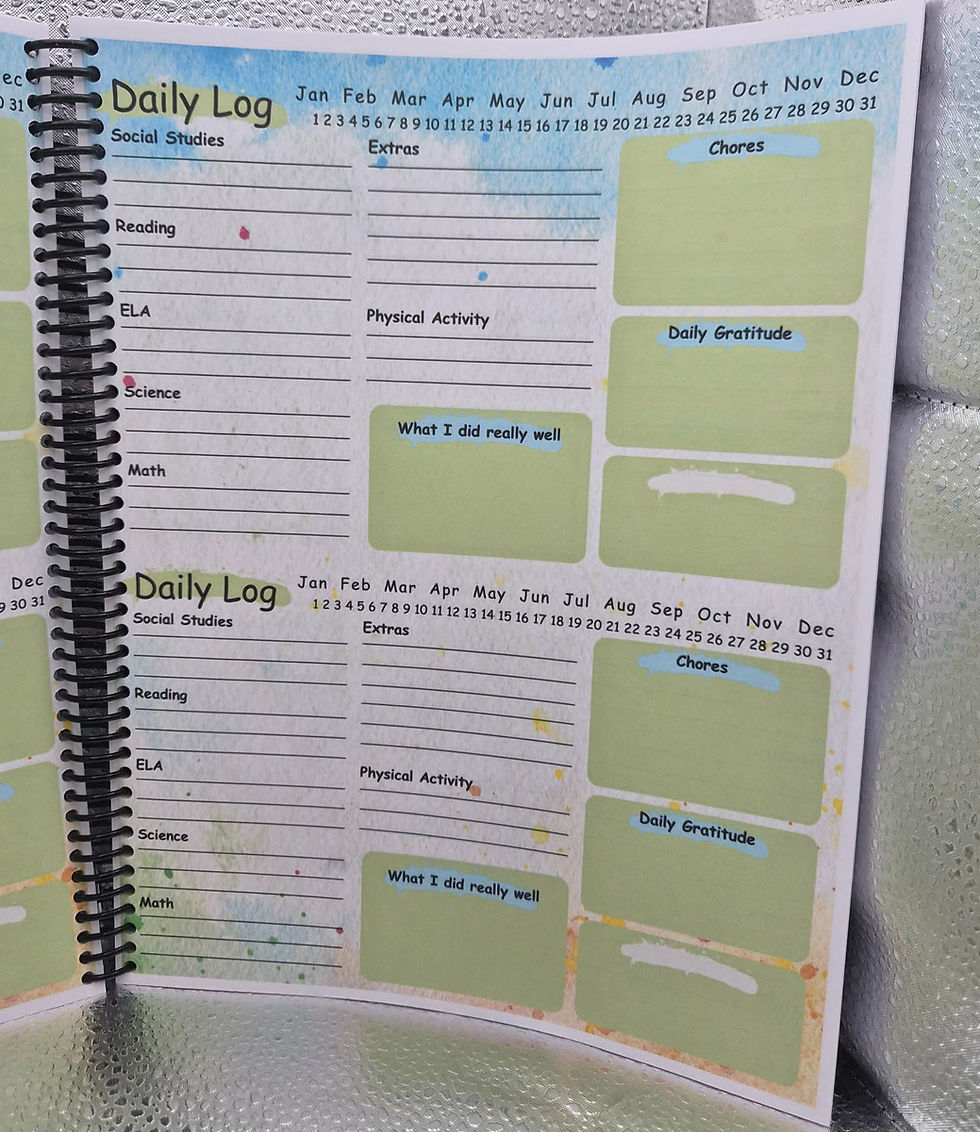
That frustration is actually part of why Wonder Roots Printing exists.
We are a homeschool family too, and we wanted families to have an affordable way to turn the curriculum they already own into books they can actually use.
If you already have a PDF and want to see whether having it professionally printed makes sense, you can use our estimator without placing an order.
And if you are wondering about paper, binding, covers, or how the whole process works, this page explains our homeschool printing service in more detail.
That is my sales pitch for the entire article.
Because the bigger point is not that you should outsource everything.
It is that you do not have to do everything yourself.
17. Do not underestimate the value of a boring routine
You do not necessarily need an elaborate hourly schedule.
Sometimes a simple rhythm works better.
Breakfast.
Math.
Reading.
A break.
One or two other subjects.
Lunch.
Outside.
Maybe your family works better in a completely different order.
The important part is that everyone eventually knows what usually comes next.
A routine reduces the number of decisions you have to make every morning.
And when life happens, you can change it.
The schedule is supposed to serve your family too.
18. Your homeschool will change
The homeschool you start with probably will not be the homeschool you have a year from now.
Your children will grow.
Their interests will change.
Something that worked beautifully for one child may completely frustrate another.
A curriculum you loved this year may not fit next year.
Your work schedule may change. Your family may move. A new baby may arrive. You may discover a co-op you love or decide that the co-op you joined is simply too much.
That is normal.
One of the greatest advantages of homeschooling is that you are allowed to adjust.
Changing curriculum is not failing.
Changing your schedule is not failing.
Taking a slower year is not failing.
Realizing that something you were certain would work does not work is not failing.
You are learning what your family needs.
Give yourself permission to build your homeschool as you go.
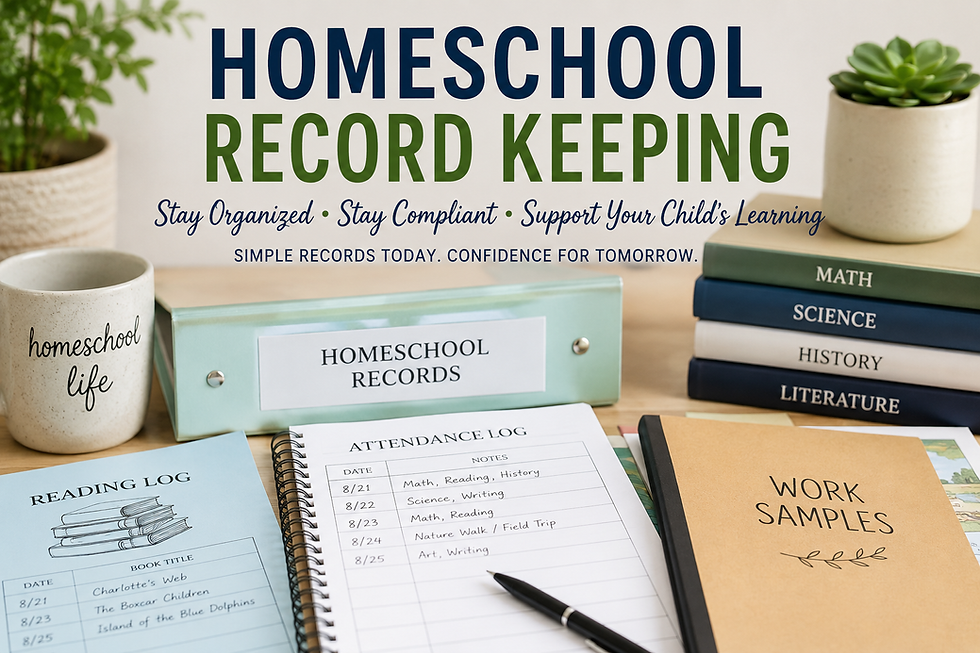
19. Keep good records before you need them
Record keeping is one of those things that can feel unnecessary until suddenly you need a record you did not keep.
What you need to maintain depends on your state's homeschool laws, so start there.
Keep copies of important documents.
Save attendance records if your state requires them.
Keep samples of your child's work when appropriate.
Record books they read.
Keep test results or evaluations that you may need later.
For older students, begin thinking about transcripts and course records before senior year.
A simple binder, spreadsheet, or digital folder can save you a lot of frustration later.
For state specific requirements, the Coalition for Responsible Home Education maintains summaries of homeschool laws throughout the United States.
You can also check your state's Department of Education website for official information.
20. You do not have to do everything yourself
This may be one of the biggest things I wish more homeschool parents heard.
Homeschooling your children does not mean personally providing every lesson, every resource, every activity, and every experience.
Use the library.
Use documentaries.
Use audiobooks.
Take classes.
Join a co-op.
Let grandparents teach something they love.
Use educational websites.
Trade skills with another homeschool family.
Take field trips.
Outsource a subject if you need to.
There are excellent free resources available too.
Khan Academy offers free lessons and practice in subjects including math, science, computing, economics, and more.
CK-12 Foundation provides free digital textbooks, lessons, simulations, and practice resources.
Project Gutenberg has a huge collection of free public domain ebooks.
LibriVox offers free public domain audiobooks read by volunteers.
NASA STEM provides free educational activities and resources.
Smithsonian Learning Lab provides millions of digital museum resources that can be used for lessons and exploration.
Your local library may also give you free access to services that normally cost money. Ask what digital learning platforms, ebooks, audiobooks, databases, museum passes, and educational programs are included with your library card.
You are still homeschooling when someone else teaches your child something.
You are simply using the resources available to you.
21. Sometimes paying for convenience is worth it
I spent a lot of time early on looking at every expense as something I should avoid.
Eventually I realized that money and time are both resources.
Sometimes the free option costs you three hours.
Sometimes the cheaper curriculum requires so much preparation that you never actually use it.
Sometimes printing hundreds of pages at home means buying ink, loading paper, fixing jams, sorting pages, punching holes, and trying to figure out where page 317 disappeared to.
This is actually part of why Wonder Roots Printing exists.
We are a homeschool family too, and we understand how quickly digital curriculum turns into a printing project.
If you already own a PDF curriculum, workbook, planner, or other educational resource and have permission to print it, you can use our estimator to see what professional printing and binding would cost before deciding whether to print it yourself.
Simply click and we can give a free estimate on printing your PDF
That does not mean everything needs to be outsourced.
It means your time has value too.
Sometimes spending a little money to remove a frustrating job from your week is completely reasonable.
22. Your children are learning even when you are not doing school
This one can take some time to really believe.
Learning does not begin when a workbook opens and stop when it closes.
Cooking involves fractions, measurement, reading, chemistry, and following directions.
Gardening can become biology.
Building something requires planning, measurement, problem solving, and persistence.
A trip to a creek can turn into an afternoon of questions about frogs, insects, rocks, water, and ecosystems.
Reading a historical novel can send a child down a rabbit hole that lasts for weeks.
A child starting a small business can encounter math, writing, communication, budgeting, marketing, and responsibility.
Not every learning experience needs a worksheet attached to it.
Sometimes the best thing you can do is notice what has captured your child's attention and give them room to keep going.
23. Do not forget why you chose this
There will probably be difficult days.
There may be days when nobody wants to do math.
Days when the house is a disaster.
Days when a lesson that should take twenty minutes somehow takes two hours.
Days when you see another homeschool family's beautiful pictures online and wonder what you are doing wrong.
Those are the days when it helps to remember why you chose homeschooling in the first place.
Maybe you wanted more time together.
Maybe your child needed a different learning environment.
Maybe you wanted more flexibility.
Maybe you wanted to travel.
Maybe traditional school was not working for your child.
Maybe you wanted education to fit your family's values and priorities.
Whatever your reason is, write it down somewhere.
You will probably need to read it again eventually.
24. You are allowed to enjoy this
Homeschooling comes with responsibility, but it does not have to feel heavy all the time.
Read the book on the couch.
Do math outside.
Take the field trip on a Tuesday.
Spend the afternoon baking.
Stay in pajamas occasionally.
Follow the weird rabbit trail.
Take a day off because everyone needs one.
Celebrate finishing a difficult book.
Go to the zoo when everyone else is in school.
Have lunch with your kids.
One day, the curriculum will be finished.
The worksheets will be thrown away.
The pencils will stop disappearing quite so quickly.
Your children will grow up.
The time you have together is part of the education too.
If you are new to homeschooling, start small
You do not need to solve the next twelve years today.
You need to know the homeschool requirements where you live.
You need a reasonable plan for your child's education.
You need some resources.
And then you need to begin.
You can adjust everything else as you learn.
There will always be another curriculum to look at, another schedule to try, another homeschool philosophy to research, and another person online telling you what you absolutely must be doing.
You do not have to chase all of it.
Build the homeschool that works for the people actually living in your house.
Give it time.
Change what is not working.
Keep what is.
And remember that you are allowed to learn how to homeschool while your children are learning too.
Quick reference
resources for new homeschool families
Here are a few places worth bookmarking:
Khan Academy for free lessons and practice.
CK-12 for free textbooks and learning resources.
Project Gutenberg for free public domain ebooks.
LibriVox for free public domain audiobooks.
Smithsonian Learning Lab for museum based educational resources.
NASA Learning Resources for free STEM activities.
And if one of the things overwhelming you is the stack of curriculum PDFs waiting to be printed, that is one thing we can help with.
Homeschooling already gives you plenty to think about. Printing does not have to be one of them.
Sources and Helpful Resources
This article was created using information from government education sources, homeschool research organizations, and educational resource providers. Homeschool laws and requirements vary by state and can change, so families should always verify current requirements for the state where they live.
U.S. Department of Education: State Regulation of Private and Home SchoolsState by state information about homeschool laws, registration, curriculum requirements, record keeping, and other regulations. The U.S. Department of Education notes that homeschooling regulation is primarily a state and local responsibility. View state homeschool information
National Center for Education Statistics: Homeschooling ResearchNational data about homeschooling families, including why families choose to homeschool. In the 2022 to 2023 National Household Education Survey, commonly reported reasons included concerns about the environment of other schools, moral instruction, family life, and dissatisfaction with academic instruction. NCES Homeschooling Research
Johns Hopkins Homeschool Research Lab and Homeschool HubResearch and data about homeschooling in the United States. A nationally representative survey reported in 2026 found that 88 percent of surveyed homeschooling parents used some form of supplemental educational resource or support. Forty four percent reported using online resources, while families also reported using co-ops, online schools, online classes, tutors, and other resources. The researchers note that the homeschool subsample was relatively small, so the estimates have limitations. Johns Hopkins Homeschool Hub
Khan AcademyFree educational lessons and learning resources. Khan Academy's mission is to provide a free, world class education, and its resources include mathematics, literacy, science, and other learning materials. Khan Academy
CK-12 FoundationFree online educational resources including customizable FlexBook textbooks, practice materials, simulations, videos, assessments, and other K to 12 learning materials. CK-12 Foundation
Project GutenbergA large collection of free ebooks, primarily older works whose U.S. copyrights have expired. This can be especially useful for literature, historical texts, and classic books. Families should still check copyright and licensing information when reproducing or distributing materials rather than simply reading them. Project Gutenberg
LibriVoxFree public domain audiobooks read by volunteers. The catalog can be searched by author, title, subject, and language. LibriVox
Smithsonian Learning LabFree access to millions of Smithsonian digital resources, including images, recordings, texts, videos, and educator created collections covering history, art, culture, science, and other subjects. Smithsonian Learning Lab
NASA Learning ResourcesEducational materials for students, parents, and educators, including K to 12 STEM activities, lesson materials, videos, hands on activities, science resources, challenges, and other learning opportunities. NASA Learning Resources
A note about homeschool laws
Homeschool requirements are not the same throughout the United States. Requirements involving notification, attendance, instructional hours, subjects, assessments, and record keeping can differ significantly from one state to another. Always check current information from your state or local education authority before relying on a general homeschool guide.
Wonder Roots Printing is not affiliated with the organizations listed above. These resources are included because we believe they may be helpful to homeschool families. Availability, pricing, content, and policies of third party resources can change.

Comments